Customer
{{::vm.session.billTo.firstName}} {{::vm.session.billTo.lastName}}
{{::vm.session.billTo.companyName}}
Customer #: {{::vm.session.billTo.customerNumber}}
Sales Rep
{{::vm.session.properties.primarySalesPerson}}
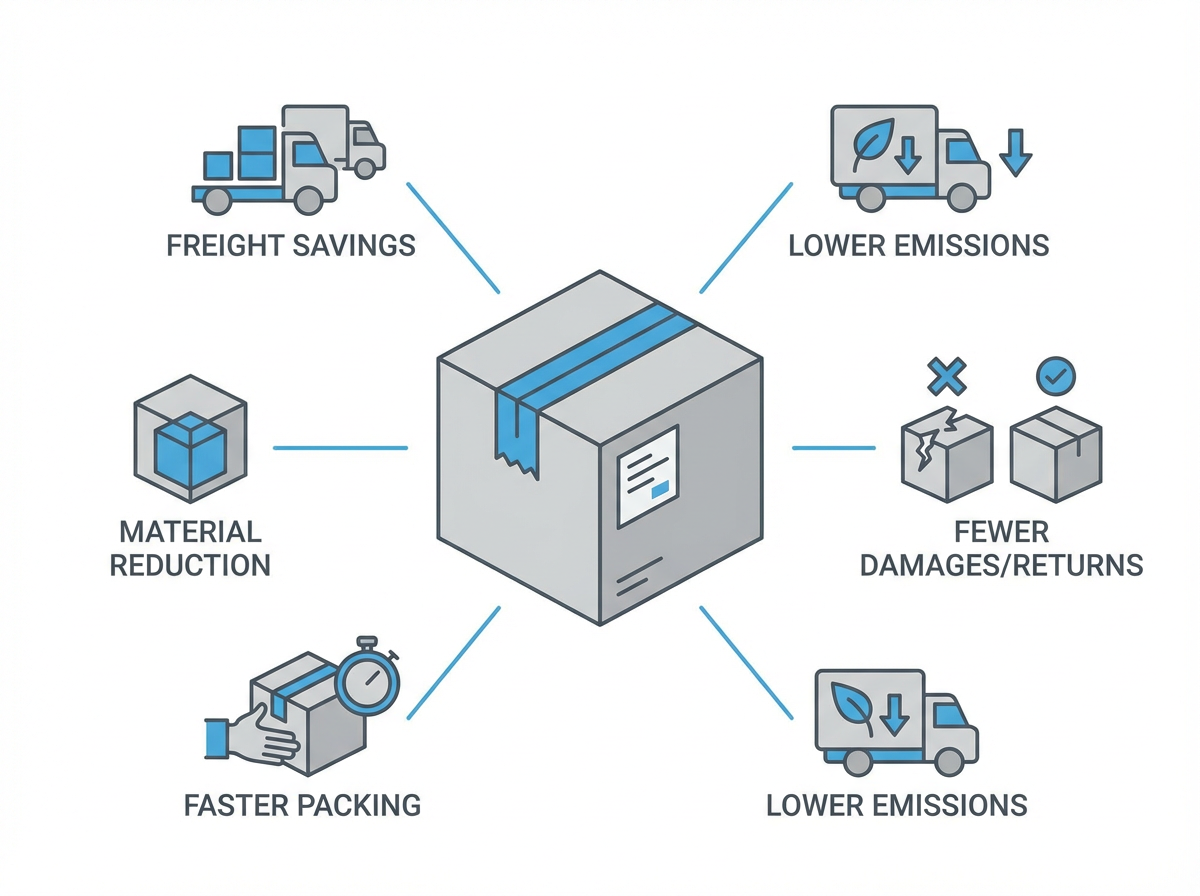
Right-sized packaging is the practice of designing cartons or containers to match as closely as possible to the dimensions of a product while also providing the necessary protection during handling and transit. This balance of dimensional efficiency and protective performance helps reduce costs, minimize waste, and improve supply chain efficiency.
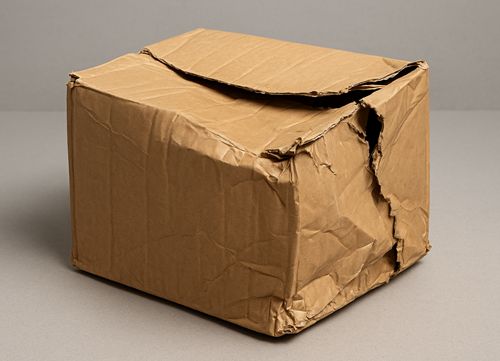
When right-sizing is not applied, the excess space in packaging leads to higher freight charges, unnecessary material consumption, and increased environmental impact. Over-packaging also results in wasted void fill, inefficient use of warehouse space, and reduced load density in shipping.
A 2024 study in Circular Economy found that packaging material waste from e-commerce and delivery services is significantly driven by oversized cartons. This excess volume impacts both operational budgets and environmental performance by increasing the material that must be produced, transported, and disposed of.
The cost implications are twofold. First, freight costs rise when dimensional-weight pricing is applied to packages with excess air, as carriers charge for the greater of actual or volumetric weight. Second, material costs escalate when larger cartons require more corrugated board and void fill. These factors can also raise warehouse storage costs, reduce handling efficiency, and increase procurement spend.
Environmentally, oversizing consumes additional raw fiber and energy, while extra void fill—often plastics or foams—adds to landfill or recycling burdens. Larger packages also lower truckload efficiency, requiring more trips, burning more fuel, and increasing greenhouse gas emissions. In aggregate, this inefficiency amplifies a company’s carbon footprint and undermines sustainability goals.
Here are a few key takeaways for packaging and operations teams:
Sustainable packaging focuses on the full lifecycle, choosing materials and designs that fit the product. Real impact comes from smart optimization and clear guidance on reuse and recycling.
Let’s create a custom packaging solution that saves you time, money and headaches—starting with a quick conversation.