Customer
{{::vm.session.billTo.firstName}} {{::vm.session.billTo.lastName}}
{{::vm.session.billTo.companyName}}
Customer #: {{::vm.session.billTo.customerNumber}}
Sales Rep
{{::vm.session.properties.primarySalesPerson}}
When people think of sustainable packaging, they often picture paper-based boxes and compostable fillers. But true sustainability goes far beyond material type. It's about total lifecycle impact and how packaging is sourced, used, and reused. Thoughtful packaging design can reduce environmental impact—without compromising performance, durability, or cost.
According to a 2025 McKinsey study, companies looking to build market share should focus on four areas: understanding the granularity of consumer behavior, engaging the full packaging value chain, designing packaging to meet the full set of consumer needs and preferences, and prioritizing consumer education. In other words, sustainability isn't just about “green” materials. It’s about designing with purpose across the full system.
The most environmentally responsible packaging solution isn’t always the one with the greenest appearance. It’s the one that best aligns with your product, your process, and your long-term goals. And that means balancing durability, protection, waste reduction, and cost, all while supporting your customers’ expectations and your company’s values.
Fiber-based materials like corrugated and molded pulp are excellent for recyclability and short-term use. When properly designed, they offer strong protection while minimizing environmental footprint.
But in many industrial, OEM, or closed-loop environments, durability equals sustainability. That’s where plastic still plays a critical role.
Reusable crates, plastic inserts, and long-lasting totes, when used in returnable or multi-trip systems, often generate significantly lower total waste and better cost efficiency than single-use alternatives. Longevity matters when measuring impact.
The key is designing with intent. When materials are chosen based on use case, not just perception, both sustainability and performance improve.
The best sustainability wins don’t always come from switching materials. Often, they come from using less material overall, or from designing smarter systems that reduce filler, eliminate void space, or increase pack density.
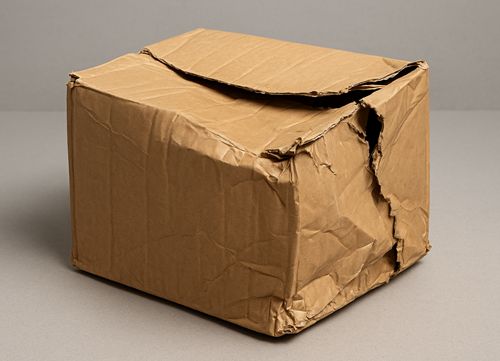
Well-optimized packaging that arrives undamaged, reduces dimensional weight, and supports reuse is far more sustainable than a recyclable box that fails in transit. This kind of optimization also supports the full packaging value chain McKinsey identifies as critical to success.
That’s why sustainability should start at the design phase, not as a check-the-box step at the end.
Sustainability isn’t about appearances—it’s about performance, design integrity, and creating a smarter packaging program that works for your product, your brand, and the planet.

Let’s create a custom packaging solution that saves you time, money and headaches—starting with a quick conversation.