{|/userfiles/2025%20custom%20packaging/articles-banner.jpg || 'Banner'}}
Summary. Extended Producer Responsibility (EPR) is transforming packaging by shifting end-of-life responsibility from municipalities and tax payers to producers. What started with products... like paint and batteries has expanded to packaging, with states like Maine and Oregon leading the way in the U.S. These laws now tie packaging design, material choice, and weight directly to compliance and cost. Businesses must evaluate packaging earlier, understand who qualifies as the “producer,” and prepare for different B2B and B2C challenges. Companies that plan proactively can turn EPR from a compliance burden into a strategic advantage.Show more

Extended Producer Responsibility (EPR): What It Is, Why It Matters, and How to Prepare

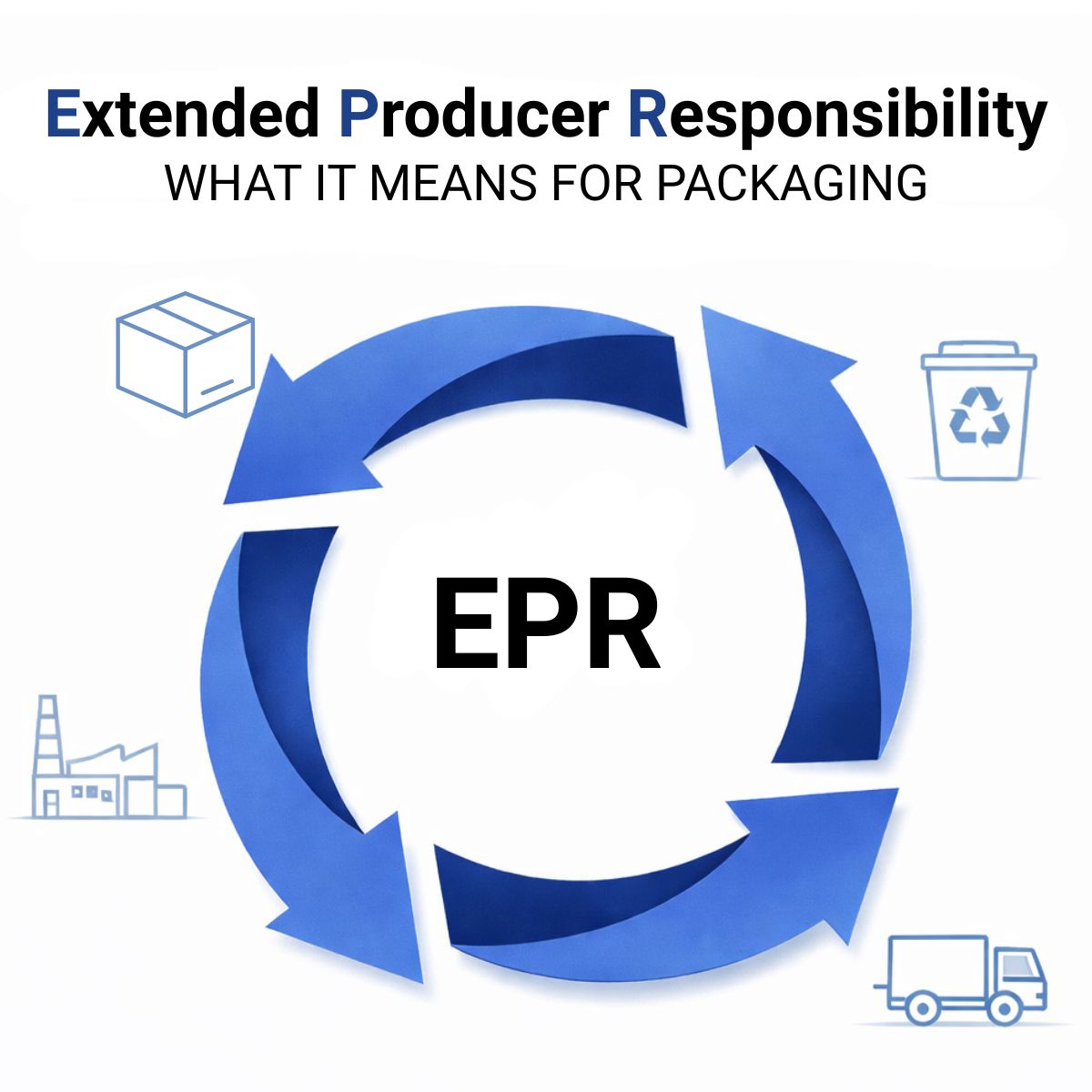
Extended Producer Responsibility (EPR) is one of the most important sustainability developments shaping the packaging industry today. At its core, EPR is about minimizing the environmental impact of a broad range of materials and products by shifting responsibility upstream—from taxpayers and municipalities to the companies that produce and profit from those materials.

There will be challenges with the implementation of EPR. Yet when viewed strategically, it becomes a structured way to improve recycling systems, modernize infrastructure, and build more sustainable packaging programs that benefit businesses, communities, and the environment.

What Is the Goal of EPR — and How Will It Be Achieved

In Europe and then in the United States, early EPR programs focused on products that posed environmental or safety risks if improperly disposed of, including:

  • Paint
  • Batteries
  • Electronics (e-waste)
  • Tires
  • Mercury-containing thermostats

These items were prioritized because they are difficult or costly to manage in traditional municipal waste systems and often contain hazardous components. By requiring producers to fund collection and recycling programs, governments aimed to reduce improper disposal, prevent environmental contamination, and improve material recovery.

Over time, policymakers expanded the EPR framework beyond niche or hazardous products to broader material streams — most notably packaging and paper products. Packaging represents a much larger volume of material in the waste stream, and shifting responsibility upstream creates financial incentives for companies to design products and packaging that are easier to reuse, recycle, or compost.

EPR laws generally achieve their goals through several mechanisms:

  1. Producer-funded systems – Companies pay fees or finance programs that support collection, recycling, and recovery infrastructure.
  2. Performance targets – Laws often establish recycling, reuse, or reduction goals over time.
  3. Eco-modulated fees – Materials that are harder to recycle or more environmentally harmful cost more, while more sustainable designs cost less.
  4. Infrastructure investment – Funds are directed into improving recycling facilities, access, education, and labeling standardization.
  5. Design incentives – Because producers bear financial responsibility, packaging and product design decisions begin to factor in end-of-life management costs.

In this way, EPR functions as both a funding mechanism and a market signal. It does not simply regulate disposal — it encourages better design, improved systems, and long-term material circularity.

Where It All Started

Europe pioneered EPR decades ago. Beginning in the 1990s, the European Union introduced the Packaging and Packaging Waste Directive, requiring producers to finance collection and recycling programs.

More recently, the EU adopted the Packaging and Packaging Waste Regulation (PPWR), which strengthens recyclability standards, harmonizes requirements across member states, and introduces eco-modulated fee structures. You can learn more PPWR here.

Europe’s model demonstrates that EPR can drive measurable increases in recycling rates and stimulate innovation in packaging design.

Additional Articles of Interest

Take Control of Your Packaging

Shippers Supply | Dec 30, 2025

The ROI of Right-Sized Packaging

Shippers Supply | Dec 16, 2025
How Packaging Shapes Perception (and Profits)

Shippers Supply | Nov 18, 2025

Shipper’s Supply—Your Strategic Partner for Packaging Solutions

Shippers Supply | Oct 8, 2025
What the United States Is Doing with EPR

Maine and Oregon: The Pioneers of Packaging EPR in the U.S.

Two states — Maine and Oregon — are recognized as the first to adopt Extended Producer Responsibility laws for packaging in the United States, setting the stage for the wave of legislation that followed.

In July 2021, Maine became the first state in the nation to pass an EPR law specifically addressing packaging and paper waste, signing Legislative Document 1541 into law. Rulemaking concluded in late 2024, and the stewardship organization is expected to begin operations in 2027.

Shortly after Maine, Oregon became the second state to adopt a packaging EPR law. In August 2021, Governor Kate Brown signed the Plastic Pollution and Recycling Modernization Act (SB 582), which took effect on January 1, 2022. The program officially went live in 2025.

Together, Maine and Oregon’s EPR programs have served as real-world pilots for how packaging stewardship can function in the U.S., giving other states examples to reference or refine as they develop their own laws.

As of February 2026, the following states have passed packaging-specific EPR laws:

  • Maine
  • Oregon
  • California
  • Colorado
  • Minnesota
  • Maryland
  • Washington

Each state’s program varies slightly in structure and timeline, but the overall direction is consistent: producers must report packaging data and financially support recycling and waste reduction systems.

What Does EPR Mean for Packaging?

Extended Producer Responsibility is changing how companies think about packaging—not just from a sustainability standpoint, but from an operational, financial, and strategic one as well.

Under EPR laws, packaging decisions now carry even more cost and compliance implications. Materials, formats, and weights that were once selected primarily for protection, efficiency, or unit cost will increasingly be evaluated through an additional lens: how easily that packaging can be reused, recycled, or composted—and how much it costs to manage at end of life.

Let’s dive deeper into some of the impacts EPR laws will have on businesses.

Packaging Decisions Move Earlier in Product Development

One of the most significant shifts under EPR is when packaging decisions are made.

Historically, packaging was often finalized late in the product development process—after product design, sourcing, and production were already set. Under EPR, that approach becomes riskier. Packaging choices made at the end of the process can lock companies into higher fees, compliance challenges, or redesign work.

As a result, businesses will need to consider packaging much earlier—alongside product design, manufacturing processes, automation requirements, and distribution strategies. Bringing packaging into these early conversations helps ensure that protection, efficiency, compliance, and sustainability goals are aligned from the start.

Custom Solutions Will Often Be the Best Path Forward

EPR also exposes the limits of one-size-fits-all packaging.

While off-the-shelf solutions may work in some cases, many businesses will find that custom or right-sized packaging solutions offer the best balance of performance, cost control, and compliance.

Custom designs can:

  • Reduce unnecessary material and weight
  • Improve recyclability or reuse outcomes
  • Support automation and productivity goals
  • Lower long-term EPR fee exposure

Rather than assuming a single material or standard format will “check the box,” EPR encourages packaging strategies that are intentionally designed around the product, the supply chain, and the end-of-life pathway.

New Responsibilities for Producers

For many companies, EPR introduces responsibilities that didn’t previously exist, including:

  • Detailed data reporting on packaging materials, weights, and volumes sold into specific states
  • Registration and participation in Producer Responsibility Organizations (PROs)
  • Fee obligations tied to material type, weight, and recyclability
  • Ongoing compliance management as rules evolve over time

These requirements can apply even to companies headquartered outside of EPR states if they ship products into those markets.

Increased Cost Visibility—and Opportunity

One of the most immediate impacts of EPR is cost visibility. Packaging materials that are difficult to recycle, contain mixed materials, or lack established end-of-life pathways are more likely to carry higher fees.

This creates pressure to reduce complexity—but it also creates opportunity. When packaging is evaluated earlier and designed intentionally, companies can often reduce total material usage, improve operational efficiency, and avoid costly redesigns later.

More Than a Material Change

One of the biggest misconceptions around EPR is that switching materials alone will solve compliance challenges.In reality, EPR requires companies to tell a complete packaging story—how materials are selected, how they move through the supply chain, and how they are managed after use.

Companies that take a proactive, systems-based approach will be better positioned to manage compliance, control costs, and support sustainability goals without disrupting operations.

B2B vs. B2C: The Critical Question — Who Is the “Producer”?

One of the most important — and often misunderstood — elements of Extended Producer Responsibility laws is how each state defines the term “producer.”

Under packaging EPR programs, the producer is the entity legally responsible for:

  • Registering with the state-approved Producer Responsibility Organization (PRO)
  • Reporting packaging data
  • Paying EPR fees

Importantly, “producer” does not simply mean the company that physically manufactures the packaging. It is a legal definition, and it can vary from state to state.

In many cases, the producer is the brand owner — the company whose name appears on the product sold into the state. But most laws use a hierarchy to assign responsibility if the brand owner does not meet certain criteria. Responsibility may shift to:

  • The importer
  • The distributor
  • The retailer

This is where real-world examples help clarify the impact. Ecoenclose.com provides the example below to help us understand.

Paper grocery bags in Oregon vs. Colorado:

  • Oregon: the packaging supplier/manufacturer is typically the obligated producer for paper grocery bags.
  • Colorado: the retailer using the bags is typically the obligated producer.

The same packaging item can trigger different responsible parties depending on jurisdiction.

Most state programs tend to follow two guiding principles when determining responsibility:

  1. Whose brand is on the product?
  2. Who selected or supplied the packaging used to deliver it to the end user?

Because definitions vary, companies operating across multiple states cannot assume responsibility falls on the same party everywhere. That uncertainty is where the next layer of complexity begins. It’s important to consult your legal team and your PRO when determining the producer.

Unique EPR Challenges for B2B and B2C Businesses

Once producer responsibility is established, the practical challenges begin — and they differ significantly between B2C and B2B companies.

For B2C Businesses: Visibility and Consumer-Facing Pressure

For many B2C companies, producer responsibility is relatively straightforward. The brand owner selling directly to consumers is typically responsible for compliance.

However, B2C businesses face their own set of pressures:

  • Packaging must align with curbside recycling systems and state-defined recyclability standards
  • Eco-modulated fees can increase costs for hard-to-recycle materials
  • Labeling and consumer education requirements may apply

Because B2C packaging enters the household waste stream, it is more clearly in scope under most EPR laws. The challenge is often less about determining responsibility and more about redesigning packaging to reduce fees and meet recyclability targets without sacrificing product protection or shelf appeal.

For B2B Businesses: Complexity and Documentation

B2B companies often face a different set of challenges.

First, scope can be less clear. Industrial packaging, secondary packaging, transport materials, and bulk formats may fall into gray areas depending on how a state defines covered materials. Even when packaging performs well in reuse or closed-loop systems, companies will likely still need to document and report it unless explicitly excluded.

Second, supply chains are typically more complex. Packaging may pass between multiple entities before reaching a final user — or it may never enter a traditional consumer waste stream at all. This makes:

  • Data collection more complicated
  • Responsibility attribution less obvious
  • Reporting more resource-intensive

Third, many B2B systems already rely on reuse models — pallets, totes, returnable containers — but EPR programs generally require those systems to be validated and documented. Reuse does not automatically equal exemption.

Shared Pressure: Earlier and Smarter Packaging Decisions

While the details differ, both B2B and B2C businesses face a common shift: packaging decisions can no longer be made late in the process.

Material choice, weight, and format now influence not only performance and cost, but also compliance exposure and long-term fee structures. Companies that wait until the end of product development to consider packaging may find themselves facing higher costs or redesign work later.

For B2C companies, this means aligning packaging with consumer recycling systems earlier in development.

For B2B companies, it means designing solutions that balance protection, automation compatibility, operational efficiency, and documented end-of-life pathways.

Key Takeaways

  • EPR is a long-term shift, not a short-term trend. While implementation will vary by state and continue to evolve, the direction is clear: producers will play a larger role in managing the environmental impact of the materials they put into the market.
  • Packaging EPR builds on earlier EPR programs. Laws that began with products like paint, batteries, electronics, tires, and mercury-containing thermostats have now expanded to packaging because of its volume and system-wide impact.
  • Maine and Oregon set the precedent in the U.S. Their early adoption of packaging EPR has provided real-world models that other states are now building from, accelerating adoption across the country.
  • Packaging decisions now carry financial and compliance implications. Material choice, weight, structure, and recyclability increasingly influence EPR fees and reporting requirements.
  • Packaging needs to be considered earlier in product development. Waiting until the end of the process increases the risk of higher fees, redesigns, or compliance challenges. Early alignment helps avoid tradeoffs later.
  • One-size-fits-all packaging won’t work under EPR. Custom, right-sized solutions often deliver the best balance of protection, efficiency, automation compatibility, and long-term compliance.
  • EPR is more than a material swap. Success depends on telling a complete packaging story—how materials are designed, used, recovered, and supported by real systems.
  • Preparation creates opportunity. Companies that take a proactive, systems-based approach can reduce risk, control costs, and turn EPR into a strategic advantage.
  • “Producer” is a legal definition — and it varies by state. The company responsible for EPR reporting and fees is not always the one manufacturing the packaging. Understanding how each state defines producer responsibility is essential, especially for businesses operating across multiple markets.
  • B2B and B2C businesses will face different EPR challenges. Consumer brands may deal with clearer scope and public visibility, while B2B companies often navigate greater definitional complexity, supply chain documentation, and reuse validation requirements.

Looking for Special Design Work to Fit a Unique Product or Challenge?

Let’s create a custom packaging solution that saves you time, money and headaches—starting with a quick conversation.

* Required

Your message has been sent.